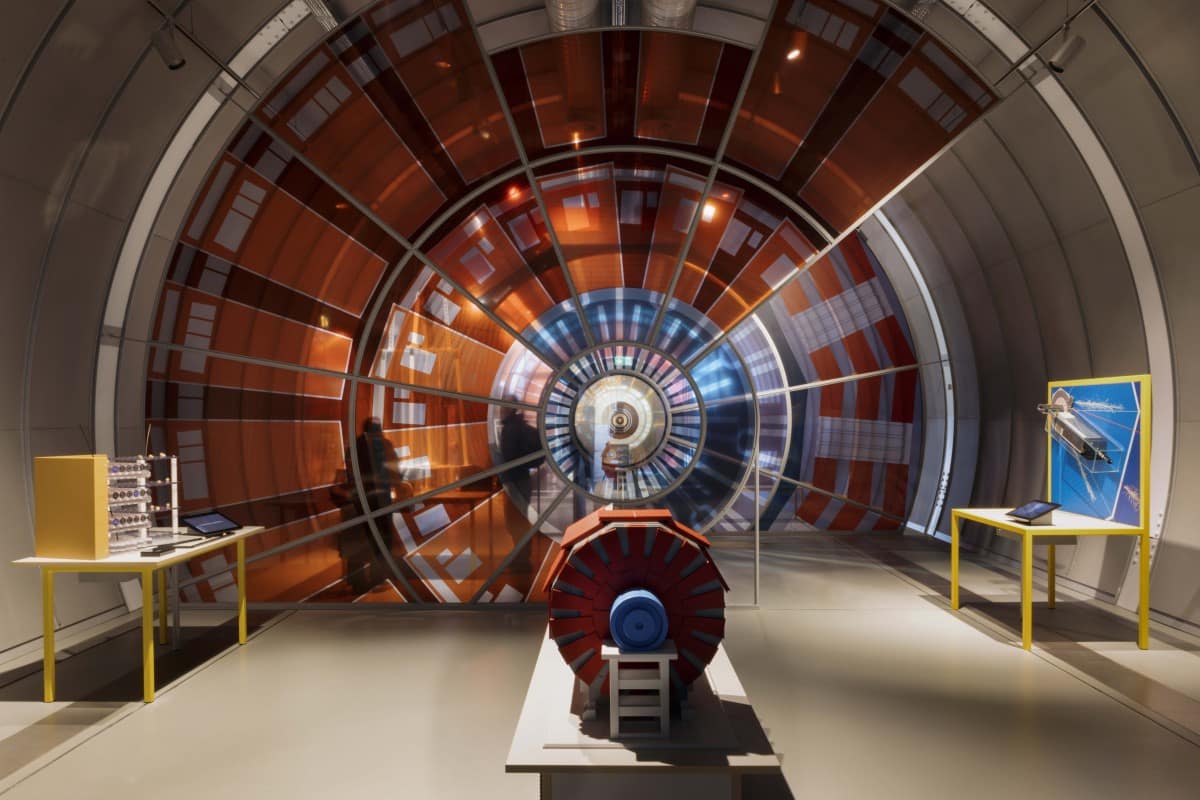
As part of its Perpetual Planet Initiative, Rolex supports CERN, the European Organization for Nuclear Research.
Rolex’s Perpetual Planet Initiative supports “building a better future for all life on earth.” The initiative was founded in 2019, but Rolex has a rich history of trailblazing scientific explorers on land and in the sea and sky for nearly a century. The spirit of daring to go beyond the limits of what’s possible and an unending quest for excellence have been part of the brand’s DNA since Hans Wilsdorf founded it in 1905.
The Perpetual Planet Initiative has three main areas of focus: Oceans; Landscapes; and Science, Health and Technology. In the realm of science, Rolex supports the work of CERN, the world’s leading particle physics laboratory, through its CERN and Society Foundation. CERN is home to the Large Hadron Collider, the world’s largest and highest-energy particle collider. It was originally established in the 1950s as a center for studying atomic nuclei. These days, the main focus is the study of subatomic particles. CERN has been the location of many scientific advancements. Tim Berners-Lee invented the World Wide Web there in 1989, and research was conducted on particle physics that led to electronic devices’ touch screens.
The CERN and Society Foundation’s purpose is to “support and promote the mission of CERN … and disseminate its benefits to the wider public.” Rolex’s support helps the Foundation raise awareness of the cutting-edge work that CERN is conducting and pursue its ongoing educational initiatives.
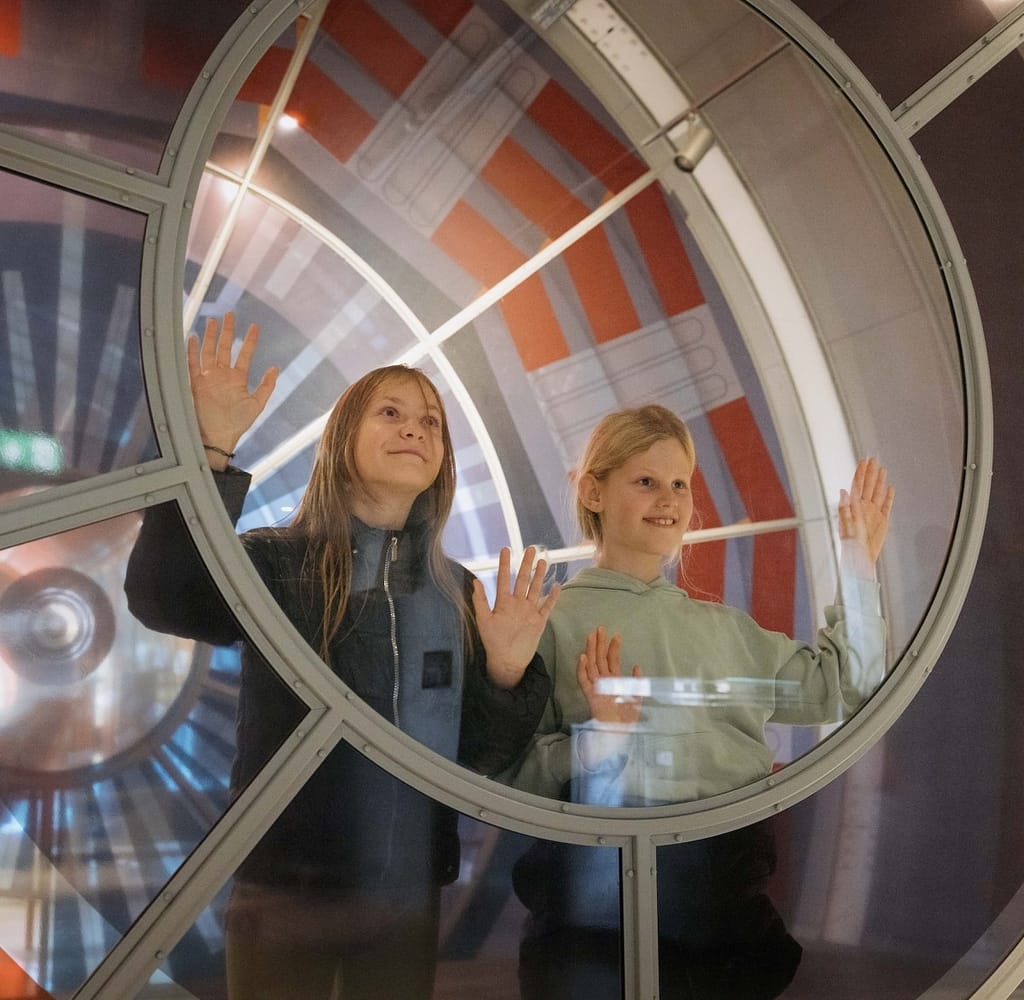
A Window to the World
Recently, CERN opened the CERN Science Gateway, an “education and outreach center describing the groundbreaking work of CERN” that is adjacent to its main facility and open to the public. Rolex supported the construction of the carbon-neutral building, which was designed by world-renowned architect Renzo Piano. Some of Piano’s other works include the Whitney Museum of Modern Art in Manhattan, the Georges Pompidou Center in Paris and the Academy Museum of Motion Pictures in Los Angeles.
The Science Gateway building is set in a forest and consists of two parts that are connected via a 6-meter-high glass-enclosed bridge, which “symbolizes the inseparable link between science and society with sustainability at its core,” according to Rolex. “Inspired by the diversity and curiosity that are intrinsic to CERN, the building encompasses multiple elements, embedded in a green forest.” The building houses three exhibition spaces, two hands-on labs, an auditorium, a shop and a restaurant. Its nearly 4,000 square meters of solar panels provide energy to the Gateway and other CERN buildings.

The Gateway offers educational science shows, hands-on lab workshops, multimedia exhibits, and more and is dedicated to people of all ages. Indeed, the center is designed to “nurture curiosity for the way the world around us works in accessible and exhilarating demonstrations,” according to Rolex. The concept of particle physics can be challenging to grasp, and the Gateway aims to provide education that is accessible, leading to a better understanding of the laboratory’s activities.

Something New Every Day
“The world should know what’s happening here at CERN because every day we find out something new and get one step closer to finding out how the universe was created and how everything around us works,” said Anastasia Tezari, science educator at the Science Gateway.
Science Nonfiction
Among the Gateway’s educational activities that Rolex supports is the annual CERN and Society Foundation’s Beamline for Schools competition. Each year, teams of high school students from around the world are invited to submit proposals for designing a particle physics experiment, which will be tested in a beamline.

In 2024, 461 teams from 78 countries submitted proposals, and the five teams with the best proposals won a trip to perform their experiments at fully equipped beamline facilities. In September, two of the teams conducted their experiments at CERN, two at DESY (German Electron Synchrotron, in Hamburg, Germany) and one at the ELSA (Electron Stretcher Facility) at the University of Bonn, Germany.
“Young scientists very quickly get specialized,” said Markus Joos, technical coordinator of the Beamline for Schools competition, “but here they do everything from electronics to communication. If the students grow, for me, that’s as important as scientific knowledge.”