The Audemars Piguet Foundation for Trees supports the “Bamboo Lemur” project run by French nonprofit Helpsimus and local Impact Madagascar organizations.
For more than three decades, the Audemars Piguet Foundation for Trees has supported the conservation and preservation of forest ecosystems. Jacques-Louis Audemars formally founded the Audemars Piguet Foundation, which is now known as the Audemars Piguet Foundation for Trees, in 1992. Three years ago, Audemars Piguet established a second philanthropic entity: the Audemars Piguet Foundation for Common Good, which supports social equity and education initiatives. Both foundations operate on a global scale and are chaired by Jasmine Audemars. Founded in 1875 in Le Brassus, Switzerland, Audemars Piguet is the oldest Swiss watchmaker that is still owned and run by its founding family.
“Operating in Switzerland and around the world, the Audemars Piguet Foundations’ approach reflects the group’s identity, which is rooted in audacity, sustainability and humanism,” the foundations stated. The support provided to Helpsimus by the Audemars Piguet Foundation for Trees is a case in point. This partnership is focused on habitat protection while ensuring that local communities and wildlife can successfully and sustainably coexist, guaranteeing sustainable natural resource management and sustainable community development.
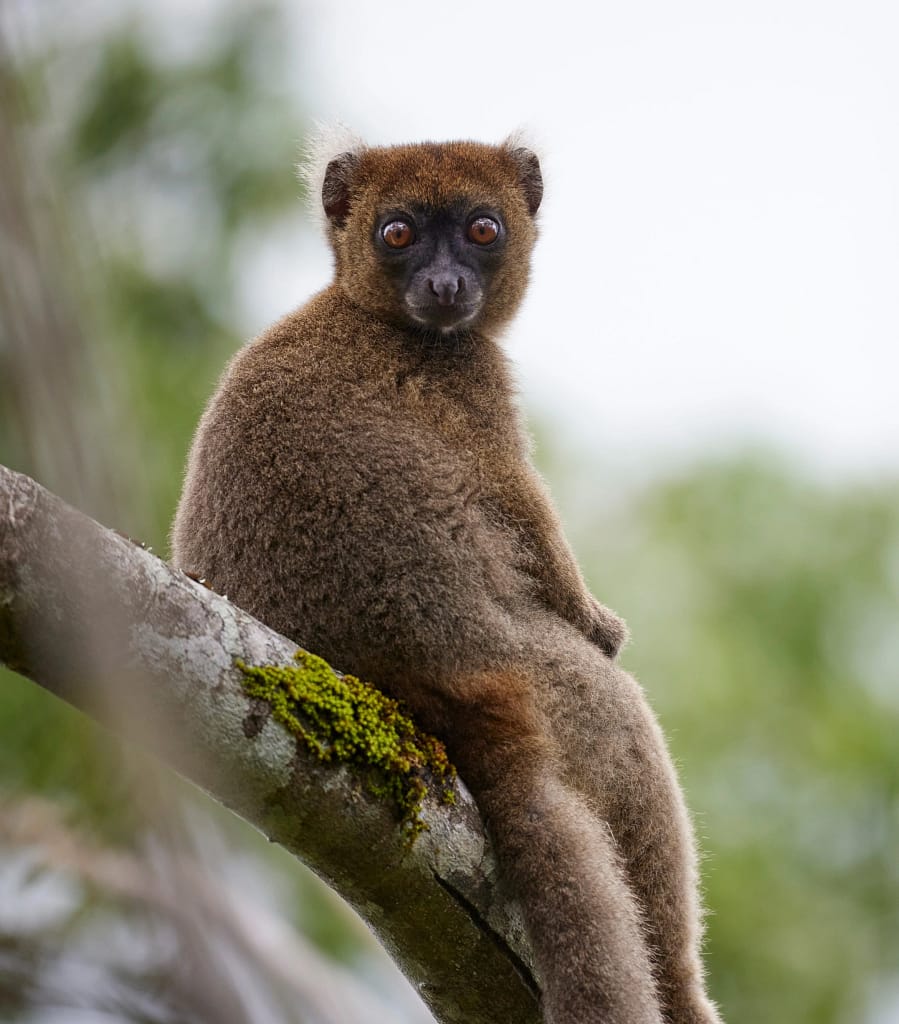
Greater bamboo lemurs are a highly endangered species and, like all lemurs, are native only to Madagascar. Helpsimus, which was founded 15 years ago, is run by primatologist Delphine Roullet, who collaborates with local partner Josia Razafindramanana, Ph.D., who is the founder of Impact Madagascar.
Making an Impact
Roullet founded Helpsimus when a new population of greater bamboo lemurs, which were on the brink of extinction, was discovered on Madagascar. For 20 years, she has been in charge of the primates at the Paris Zoological Park and runs their captive breeding program. “In 2008, an article was published about the disappearance of the greater bamboo lemur, so I decided to go to Madagascar to see how the zoos could be involved in the protection of this species,” she said. “The question was how to fund this program, and I created Helpsimus to do that, but rapidly we became co-coordinators of the program with the local community and the Ranomafana National Park.”
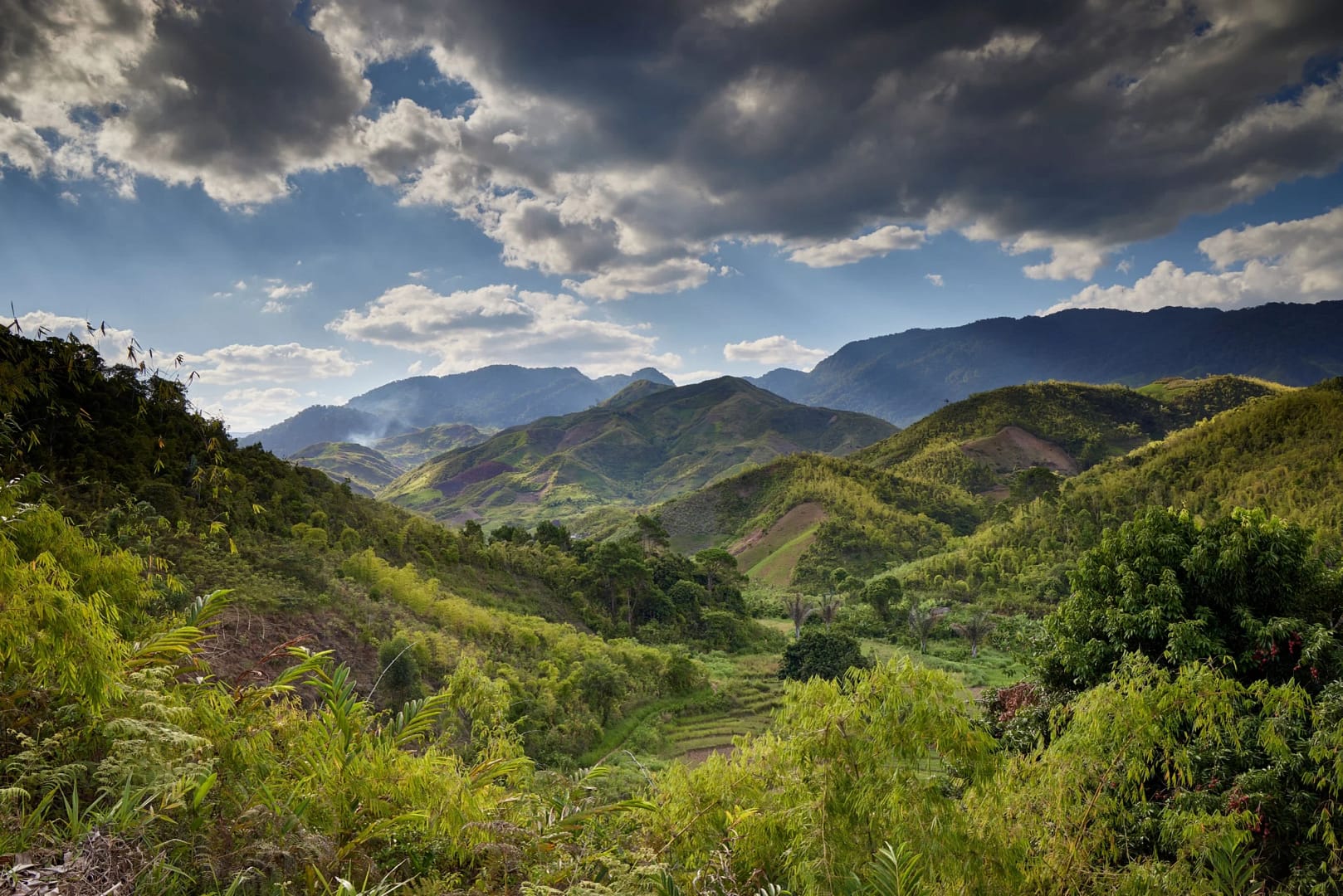
Ten years ago, “we entrusted Impact Madagascar with the operational implementation of part of our Bamboo Lemur program’s activities, particularly those related to community development,” Roullet said. The area where the greater bamboo lemurs live is “like a mosaic of agricultural lands, forest fragments, villages and bamboo forest, which is very important for this lemur, because bamboo is the majority of their diet,” Roullet said.
Slash-and-burn agriculture is the main threat to the loss of habitat and locally specific ecosystems, according to Dr. Razafindramanana. “The reason why people are doing slash-and-burn agriculture is for subsistence farming. One of the things that we address in the conservation aspect is the livelihood of local communities. We train local communities at the household level to improve the farming techniques in order to reduce the use of fire. The main challenge is how to give enough means and resources to local communities to allow them to protect biodiversity.” The local population suffers from chronic malnutrition, and has difficulties educating their children and accessing healthcare. “It’s very difficult for these people to have enough energy and means to protect biodiversity because their first priority is their survivorship.”
Community Development
Impact Madagascar trains farmers and helps them monitor their farms, and Helpsimus launched a program to teach the local communities to develop other income sources, including making handicrafts and selling local produce. Helpsimus built a shop in the Ranomafana National Park specifically for selling products from local communities. After establishing the shop, Helpsimus commissioned Impact Madagascar to manage the shop and further develop income-generating activities.

“We buy from the local communities and we sell them at the shop,” Dr. Razafindramanana said. “The idea is to have that shop be a self-sufficient business. We employ women to run the shop, and we pay those women per month whether or not we are able to sell the products and the handicrafts. The idea is to help them to reduce their dependence on natural resources by improving the way they live every day.”

Preparing the Next Generation
From the beginning, Helpismus has been developing an education program in the local communities. With better childhood education, Helpsimus assures that in the future “life will be a little easier for them when they become adults. It’s a very key project in our strategy to protect the lemurs. And protecting the lemur is one thing, but the most important thing is to protect their environment, and by educating the children, you’re preparing the next generation to continue on with this.”
In addition to helping the communities, Helpsimus and Impact Madagascar restore forests on government land. “In terms of reforestation, we have four nurseries and we employ local communities to take care of the sapling production until we plant them,” Dr. Razafindramanana said. “During the three tree-planting days, local communities from all the villages come together to do the planting.” In addition to government lands, the organizations provide trees to individuals for their land. “We have another tree planting program for communities’ land. If you would like to plant trees in your own land, especially for fast-growing tree species, we provide the seedlings and we create a kind of contract with those households. They will take care of the seedlings that they receive from us and we will be able to monitor the growth of these trees.”

While Helpsimus and Impact Madagascar have made great strides in the last 10 years, there have been significant challenges, including a big cyclone in 2022 that caused widespread destruction. The Audemars Piguet Foundation for Trees has provided continual support, and that helps sustain their results and achieve their goals, according to Dr. Razafindramanana. “This grant is quite unique because it covers several years in a row, which really helps to sustain the results. And that’s what we really need if we want to make a difference and bring about change.” And in times of great need, the Audemars Piguet Foundation for Trees has been nimble and able to react quickly.
As the Bamboo Lemur programs have evolved, their latest stage includes guaranteeing the protection of the forest fragments within their area of focus. The biodiversity in these areas, including the largest population of wild greater bamboo lemurs, is also protected as a result. Supporting education, raising children’s awareness of environmental issues, and ensuring sustainable protection of the lemur’s habitat all contribute towards reaching this goal.