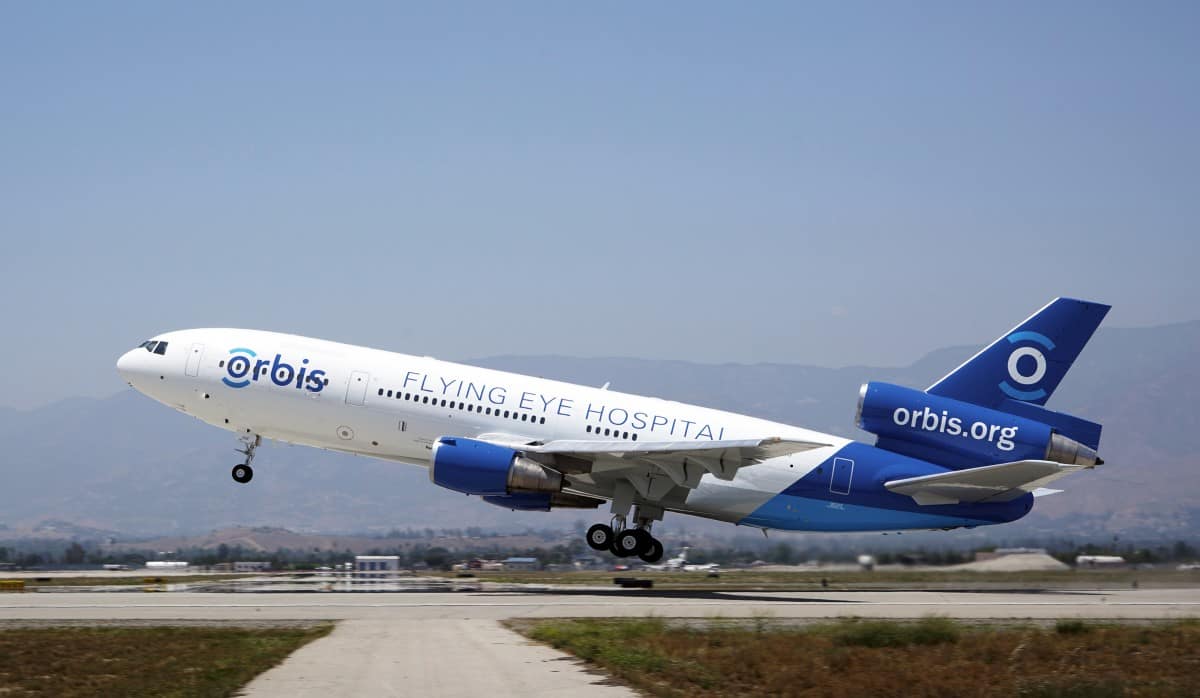
Omega’s ongoing support of vision-saving organization Orbis International’s flying eye hospital is a testament to its unwavering commitment to “changing the way the world sees.”
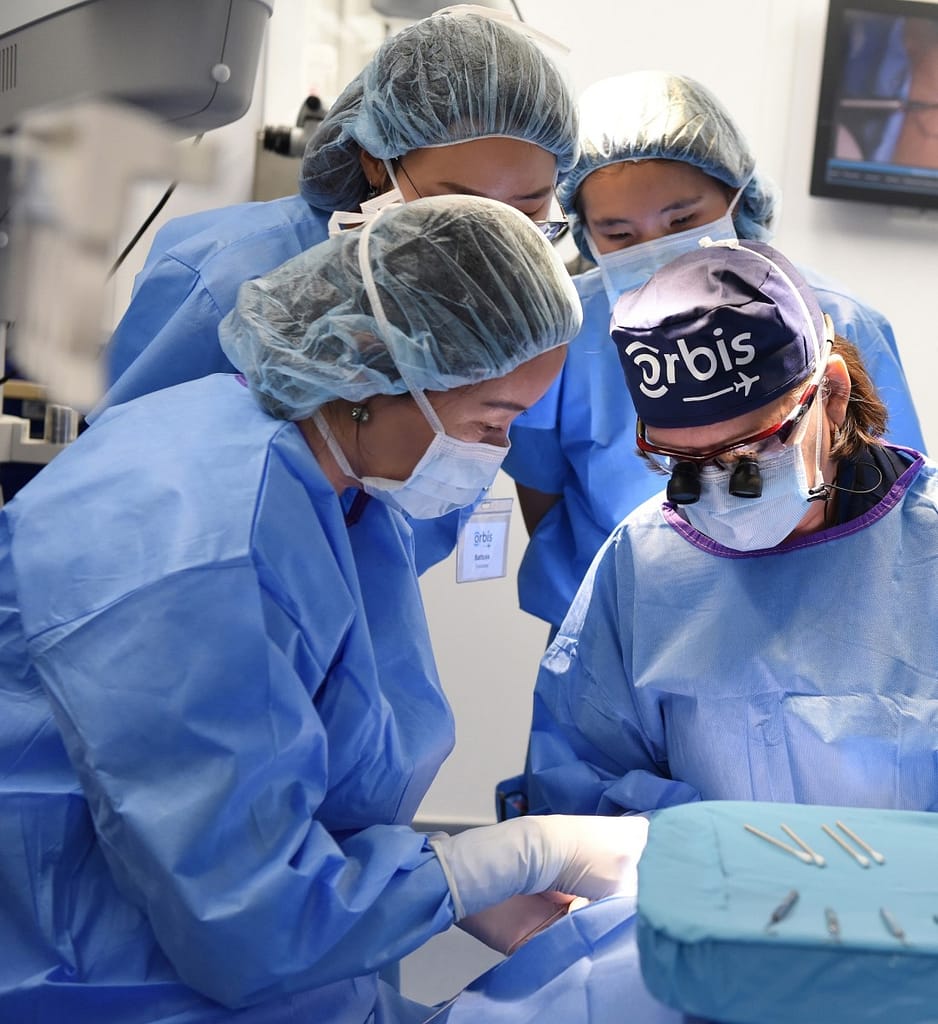
Orbis International is a global nonprofit organization that trains and mentors eye care teams, ranging from eye surgeons in urban areas to health workers in rural clinics. Orbis operates the world’s only flying eye hospital, a fully accredited ophthalmic teaching facility onboard its MD-10 aircraft. The organization transports doctors and health professionals to remote areas to treat local patients in need of vision care. Perhaps more importantly, Orbis provides valuable education for local medical practitioners with hands-on ophthalmology training aboard the plane.
According to Orbis, 90% of all vision loss is treatable or preventable. The traveling hospital runs programs in Latin America, Africa, Asia and the Caribbean. The organization also operates Cybersight, an award-winning telemedicine platform.
A Commitment to Communities
Founded in 1982, Orbis has benefited from Omega’s continued support since 2011. “I feel truly proud to witness the incredible partnership between Omega and Orbis International,” said Raynald Aeschlimann, president and CEO of Omega. “Eyesight is so important, and it’s very inspiring to see how training eye care professionals in their communities can change lives. It’s an honor to support this organisation in every way we can.”
In 2024, Orbis performed more than 2.2 million eye screenings and examinations at schools and community outreach events. The organization completed over 38,000 trainings for eye care professionals and community health care workers, and prescribed more than 72,000 pairs of eyeglasses. The organization’s plane has a state-of-the-art training facility, a classroom, an operating room and a recovery room. The medical professionals are all volunteers who share their valuable skills, educate local providers and perform sight-saving surgery. The volunteers are “comprised of world-leading experts in eye health,” according to Orbis.

An International Network
“Our global force of 400 volunteer ophthalmologists, nurses, anesthesiologists and biomedical engineers from over 30 countries share their skills with local teams to help improve the level of eye care for generations to come. With the support of our partners, we have trained hundreds of thousands of doctors, nurses, biomedical engineers and eye care workers over the past four decades. As a result, we have positively impacted the lives of millions of men, women and children, enabling them to see the world clearly and reach their full potential.”


Mission: Possible
Omega is no stranger to pioneering scientific flights. Omega watches were the first to be worn in space and the first to land on the moon. In 1962, astronaut Wally Schirra wore his Omega Speedmaster into space aboard the Mercury Sigma 7 mission, which orbited the Earth six times in less than 12 hours. Three years later, in 1965, Omega was one of four brands invited to submit chronograph timepieces to NASA for space qualification. The space agency performed rigorous physical testing on the timepieces, and only one watch qualified—the Omega Speedmaster.
The Omega Speedmaster went on to be approved for all manned space missions and extravehicular activities. In 1969, as Apollo 11 landed on the moon, each astronaut wore a Speedmaster as part of his equipment. To this day, the Omega Speedmaster “moonwatch” is the only watch that is qualified by NASA to be worn in space.
In addition to its financial support, Omega funds Orbis’ tradition of gifting teddy bears to younger patients. Seymour the bear helps children ease their fears about medical eye treatment and serves as a teaching tool for the practitioners to explain what will happen during their procedures. Looking to the future, Orbis is poised to go as far as the eye can see—and beyond.