The one-of-a-kind timepiece, introduced today at the Louvre, required seven years to create and includes 23 watchmaking complications.
Vacheron Constantin unveiled its latest horological masterpiece today at the Louvre. More than just a clock, the La Quête du Temps incorporates an automaton whose arms move to tell the time, plays musical sequences, houses six perpetual calendars and displays the astrological zodiac sign that corresponds with the date. In all, the clock has 23 horological complications and took seven years to create. Its clock will be the centerpiece of the museum’s “Mécaniques d’Art” exhibition, which will be open to the public from September 17 until November 12.
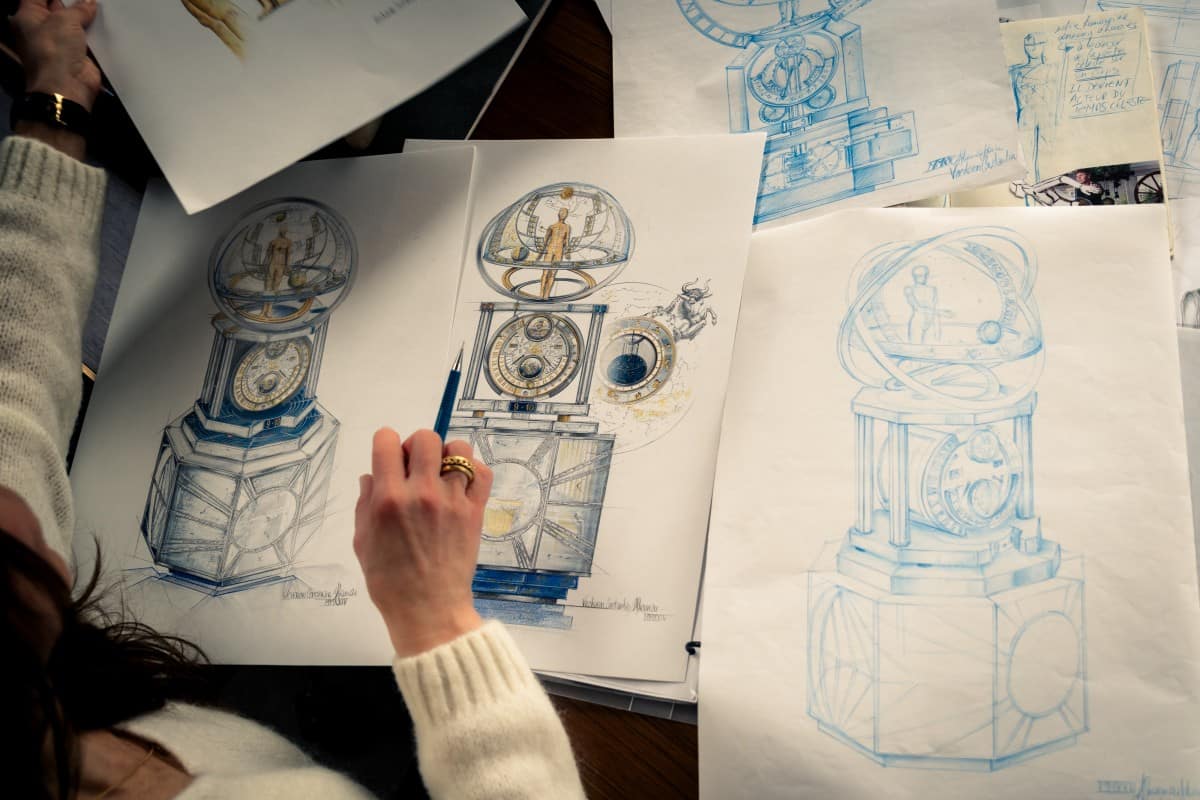
Speaking to the process of conceiving and designing the one-of-a-kind clock, Christian Selmoni, the brand’s director of style and heritage, said, “The idea of integrating an automaton into a clock came up: from the earliest automatons recorded during Ancient Greek and Persian empires until now, there is no evidence of any being integrated into a clock as part of the timekeeping function; rather, all were stand-alone devices or supplementary animations. The Maison’s teams looked at how they could revisit the two worlds—of automata and of clockmaking—and dreamed of an automaton that would indicate the hours and minutes.”
Marking a Milestone
Founded in 1755, Vacheron Constantin is celebrating its 270th anniversary this year, making it the world’s oldest watch brand in continual operation. The clock was unveiled as part of the brand’s anniversary celebration, adding to the timepieces introduced at the 2025 Watches and Wonders show in Geneva. Vacheron Constantin has had a partnership with the Louvre since 2019, as “a celebration of beauty and a commitment to the preservation and transmission of heritage.”
The clock’s creation is the result of years of collaboration between the brand’s master watchmakers and artisans, including Swiss automaton maker François Junod, engineers and astronomers. The clock’s case features a rich mix of materials—rock crystal, lapis lazuli and quartzite, among others—that are rarely utilized in watchmaking.

“It took a great deal of time to choose and source the materials, even before starting the meticulous work of crafting them,” Selmoni said. “Take the rock crystal, for example: to clothe the base that houses the automaton mechanism, very large pieces of the highest quality were needed. It took two years to find the right source—and once the team had all those kilos of material, the challenge was to cut it, machine it and hand-finish it, even before starting the task of installing it on the object.”

Mechanical Marvel
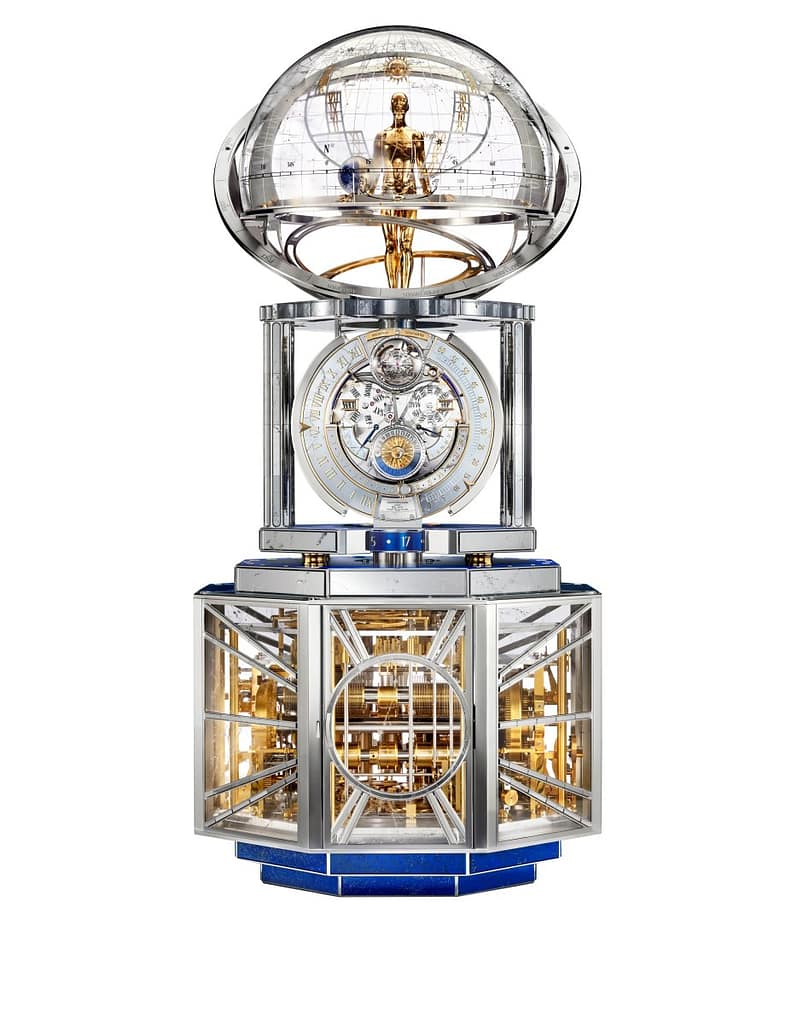
Junod created the clock’s automaton, which is housed in a hand-painted glass dome depicting constellations of the Northern Hemisphere. The automaton was crafted to resemble a human astronomer that “not only indicates the time but also invites viewers to contemplate the beauty and mysteries of the cosmos and the astronomical phenomena that lie at the foundation of mankind’s ability to measure time,” according to the brand. The automaton is made of eight yellow gold-plated cast iron parts and can articulate in five positions. Its body is set with 122 brilliant-cut diamonds and hand-engraved with constellations.
Standing Tall
The clock consists of three integrated layers and stands at more than a meter high. The hand-painted glass dome at the top holds the astronomer automaton, and the center section houses the astronomical clock with both a front and a back dial. The clock’s octagonal rock crystal base features a two-layer plinth crafted of lapis lazuli and depicts the solar system.

La Quête du Temps is a true mechanical masterpiece, showcasing Vacheron Constantin’s technical expertise and flawless finishing. The clock’s design takes inspiration from historical Vacheron Constantin clocks, including a clock that was co-created with Junod to celebrate the brand’s 250th anniversary in 2005.
La Quête du Temps is Vacheron Constantin’s latest masterpiece, but it certainly won’t be the last. “Is it always possible to do better? Is it always possible to be amazed? Undeniably,” CEO Laurent Perves said. “At Vacheron Constantin, the pride and emotion we feel with each new project comes from the freedom and passion to create, which is fuelled by the quest for excellence and innovation.”