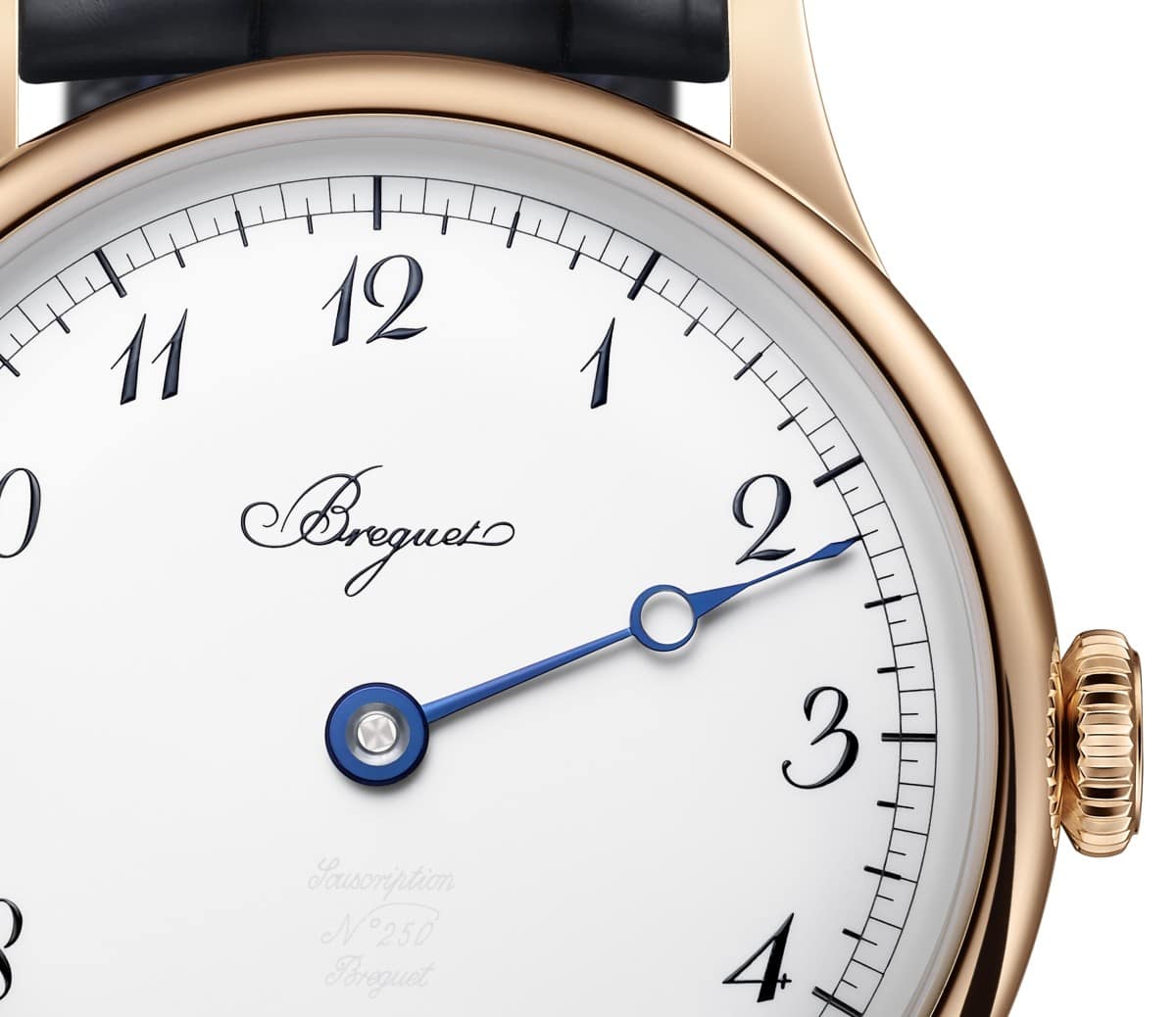
Two of the ‘seven unmistakable signs of Breguet,’ the brand’s signature hands and numerals were designed by its founder, Abraham-Louis Breguet.
Abraham-Louis Breguet was a groundbreaking watchmaker who developed several mechanical complications during his lifetime, many of which are still incorporated into watches to this day. He is perhaps best known for vastly improving the timing accuracy of his movements with the invention of the tourbillon, a mechanical complication that is highly valued by collectors to this day. Mr. Breguet’s eponymous brand, which he founded in 1775, is celebrating its 250th anniversary this year and still going strong.
In addition to his numerous mechanical timing milestones, Breguet made strides forward in other areas of watchmaking. He designed his signature Breguet hands and numerals, which the brand incorporates in some of their watch dials to this day. While Breguet was not an artist or designer per se, in his day, every watch was completely handmade, and a wide variety of skills including engineering and aesthetics were needed to build a watch.
In Breguet’s time, most watches (all of which were pocket watches in his era) had cases and dials that were ornately carved and heavily decorated. Often the timekeeping accuracy was less valued than the status of owning a watch. Each pocket watch in those days was personally ordered by its future owner and made by souscription, sometimes taking years to complete. In addition to their myriad decorations, watches had short, thick hands and Roman numeral hour markers, making it even harder to read the time.
The Legibility Factor
The now-iconic numerals were a design detail that Breguet developed to aid the legibility of his watches. “From his earliest days as a watchmaker, Breguet set out to streamline not only the internal mechanisms but also the external forms of his watches,” according to the brand. His distinctive numerals featured unmistakable design details that are well-known and loved by horological connoisseurs (and have been widely emulated by other brands). “Breguet numerals blend cursive and printed styles featuring bold black lines that taper to fine points, a subtle slant, and tilde-shaped arms on the 2 and 7. This creates a classic, antique appearance while maintaining clear legibility,” the brand said.

Refined Hands
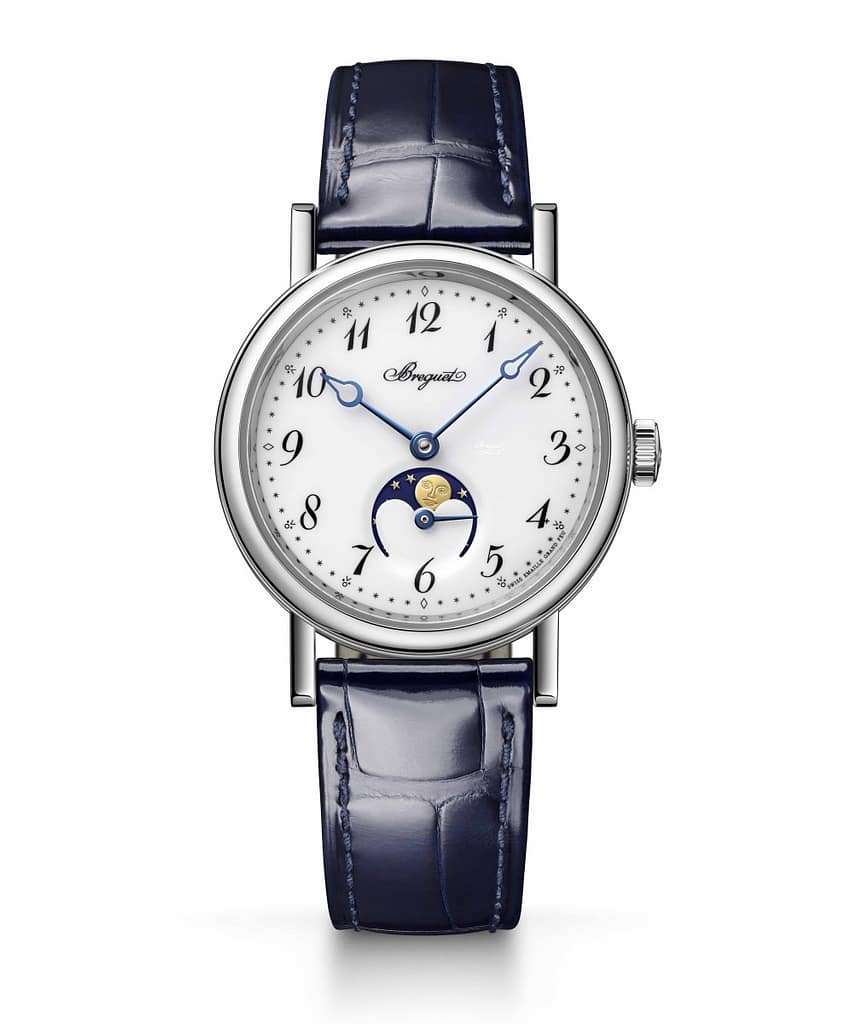
Reading the time was also a clear goal for Mr. Breguet when he conceptualized the design for his revolutionary hands, which were a significant departure from the standard watch hands at the time. His intention was “to make for a streamlined, simpler, refined, and very easily legible timepiece,” according to the brand. Breguet conceived slim hands with an open circle shape, which was often described as a hollow apple or a crescent moon just below their sharp points. He hired local metalsmiths to bring his vision to reality in two versions: one in gold and the other in blued steel. In addition to its distinctive blue-black color, the bluing process (pictured left) also prevents rust from developing.
An Indelible Mark
Breguet’s new style of hands was considerably longer and thinner than those made by his contemporaries. “As the hands are an essential part of the watch, both functionally and aesthetically, it is not surprising that this is another area in which Abraham-Louis Breguet left his indelible mark,” according to the brand. “Given their ‘different’ look, and being of extreme delicacy and irresistible elegance, the new shape was an immediate success.” Breguet’s new Souscription watch, created for its 250th anniversary, features a single blued hand in the signature style.

“Simple and easy-to-read, the hands are found on most Breguet timepieces and have been widely imitated by others. The hands are the perfect combo of form and function,” according to the brand. Nowadays, all Breguet watch hands are crafted at the brand’s manufacture, and nearly every watch they make—with the exception of the Type XX timepieces—has Breguet hands. In honor of its 250th anniversary, the brand crafted its new Souscription watch’s hands using antique tools. “We resorted back to the earliest method of hand-bluing, as a nod to the pocketwatch that inspired this very piece,” it said. A fitting tribute, indeed.